Introducing Neural Radiance
Reconstruct reality. Beyond the limits of a camera.
For centuries, arenas have been places where humans push the boundaries of physical intelligence.
Every movement. Every collision. Every fraction of a second.
But what if reality could be reconstructed beyond what a camera sees?
What if every moment could be observed from an entirely new perspective?
This is the promise of Neural Radiance.
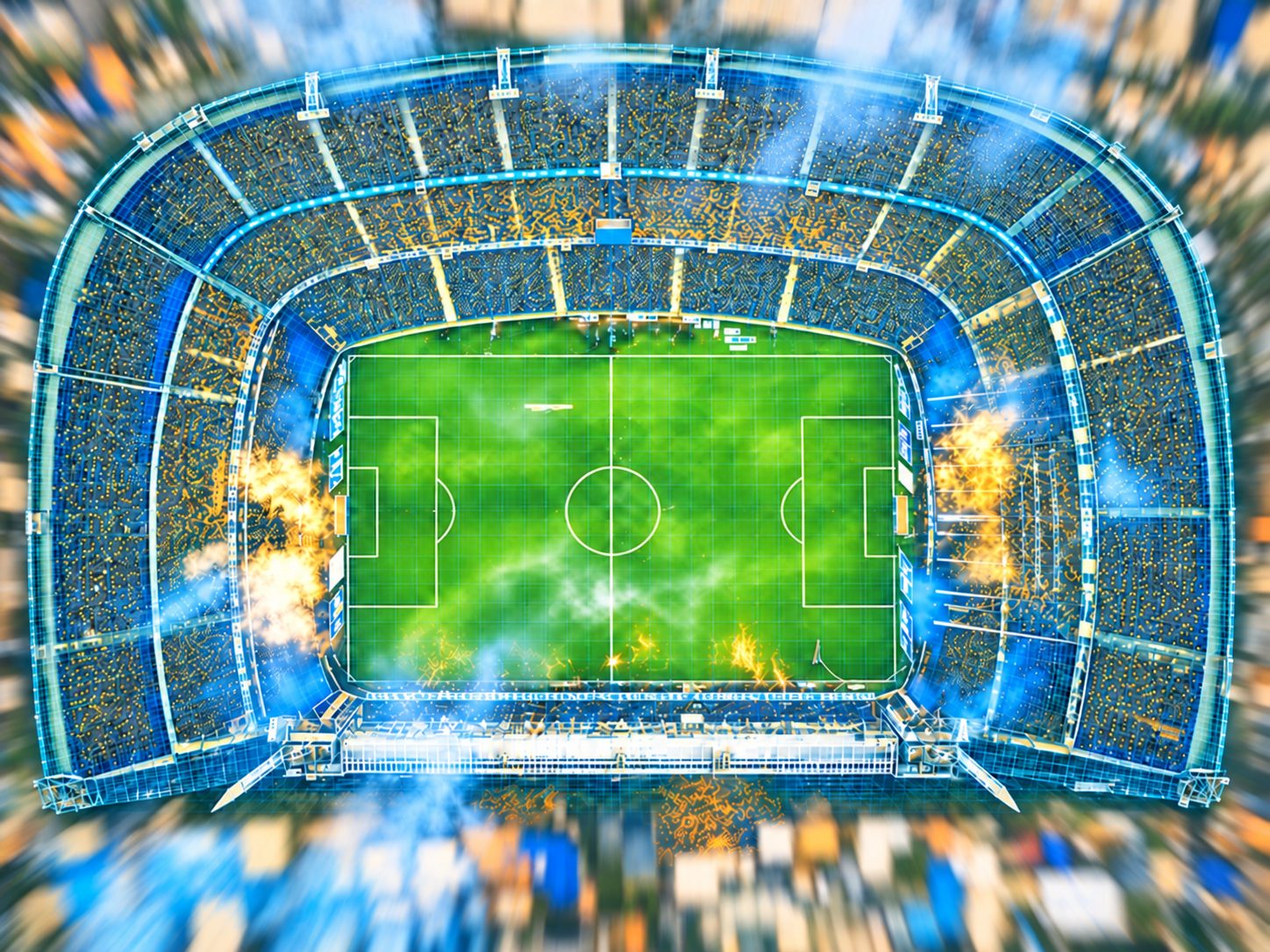
Beyond Pixels. Into Reality.
Traditional cameras capture the world as flat images.
But reality is not two-dimensional.
In 2020, researchers introduced Neural Radiance Fields (NeRF), a method for representing complex three-dimensional scenes through continuous neural functions.
Instead of storing a scene as a fixed collection of pixels, NeRF learns how light and density behave throughout space.
A five-dimensional input — three spatial coordinates and two viewing directions — is mapped to volume density and view-dependent color.
Through differentiable volume rendering, the system synthesizes images from previously unseen viewpoints.
The result is a new way of representing visual reality.
Not simply recording a scene.
Learning how to render it.
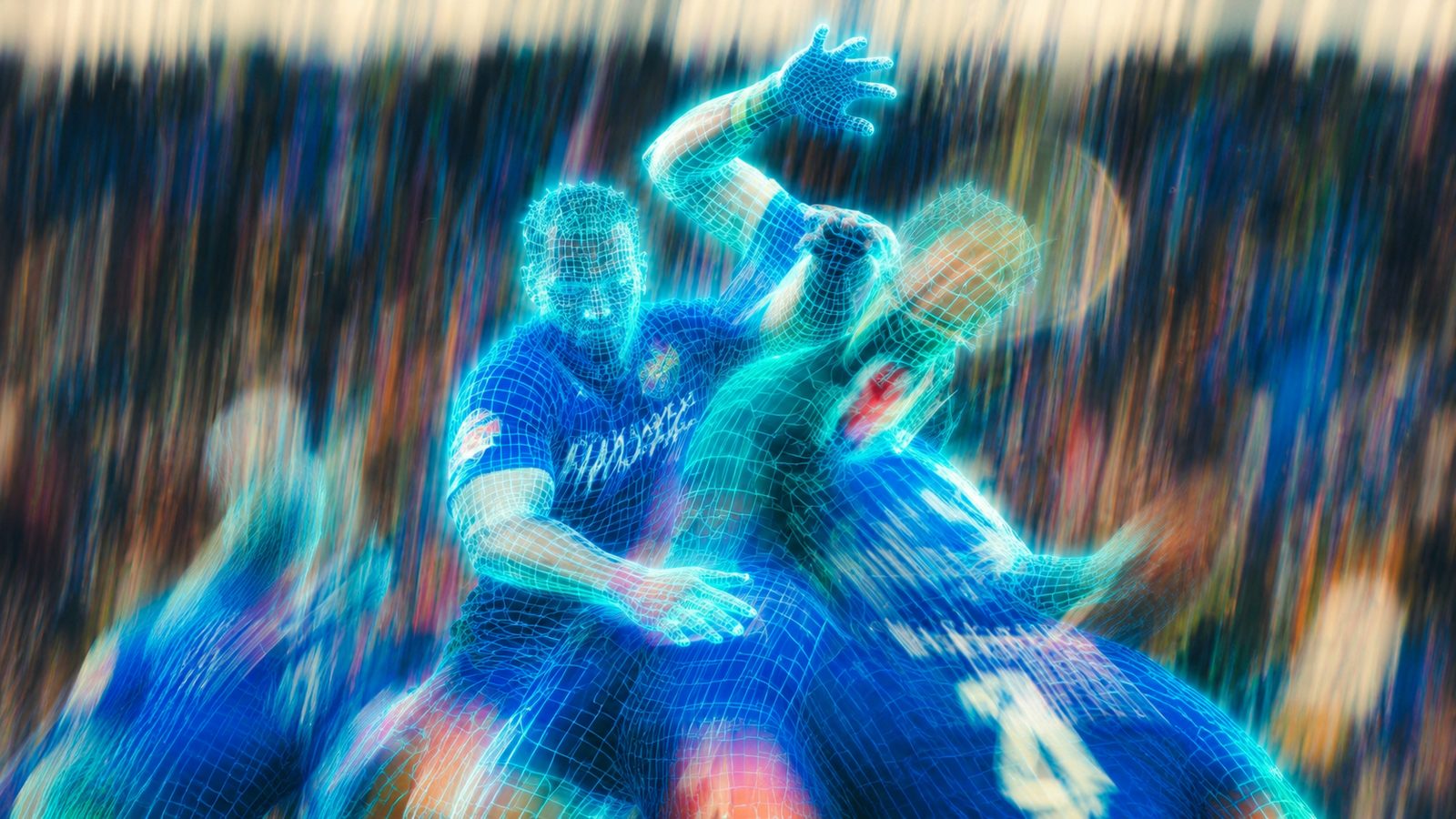
Solve Sports. Challenge the Limits of Neural Rendering.
Sports are among the most demanding environments for understanding the physical world.
Bodies collide. Players accelerate. Cameras lose sight of the action. Light changes. Movements become unpredictable.
Nothing stays still.
And that is precisely the challenge.
The original NeRF framework was developed primarily for static scenes. Dynamic Neural Radiance Fields extend this foundation toward reconstructing people, movement, and changing environments over time.
Imagine a football match reconstructed beyond its original camera angles.
Every player occupying a position in a shared three-dimensional space.
Every movement observed from a perspective the broadcast never captured.
Every frame contributing to a richer representation of the arena.
Sports become more than entertainment.
They become a demanding test of how faithfully neural systems can reconstruct a changing world.
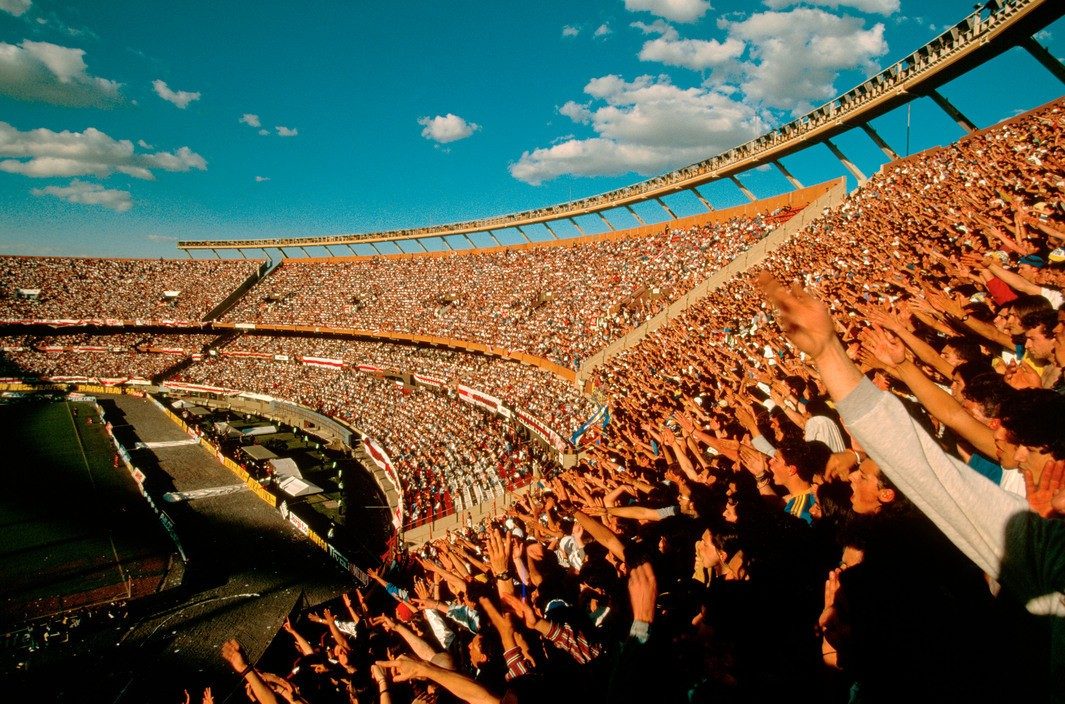
The Arena Is a World of Light.
A stadium is not just a field surrounded by spectators.
It is geometry, motion, occlusion, illumination, and perspective interacting in real time.
Neural Radiance offers a different way to think about this environment.
Light is no longer merely something captured by a sensor.
It becomes part of a learned representation of space.
From the movement of an athlete to the reflections across a stadium, neural rendering research seeks to reconstruct visual scenes with increasing fidelity.
The objective is not simply to reproduce an image.
It is to make new viewpoints possible.
A world that can be explored beyond a single lens.
From Neural Rendering to Embodied Intelligence.
Reconstructing reality is not the same as understanding it.
A neural radiance field alone cannot explain an athlete's intentions, predict every collision, or understand the rules of competition.
But visual reconstruction can contribute to something larger.
Rich spatial representations can support research into perception, motion analysis, and systems that interact with physical environments.
Sports offer a natural setting for exploring those possibilities.
Competition demands adaptation.
Physics imposes consequences.
Every action changes what happens next.
To build intelligence that operates in the physical world, AI must eventually confront more than static images.
It must confront motion, uncertainty, and the structure of reality itself.
The Next Perspective.
Two thousand years ago, the Colosseum brought thousands of spectators together to witness physical competition.
Every spectator saw the arena from a different position.
Today, neural rendering opens the possibility of reconstructing scenes from viewpoints no spectator occupied.
From images to geometry.
From geometry to radiance.
From observation to reconstruction.
The world does not end at the edge of a camera frame.
Neural Radiance.
Reality beyond the frame.
We're just getting started.